Wednesday, 26 February 2014

three c's of healthy relationships.

The foundation of any good relationship can be built on the three c's: Communication, Cooperation, and Compromise. In terms of the three c's, here's what a healthy and an unhealthy relationship would look like.

Healthy
Communication: Trust and respect are an important part of all communication, and both members of the relationship are open with the other.
Cooperation: Arguments are avoided when both people are open to change and are willing to cooperate with the other person, and with life in general. There's not a need for control.
Compromise: When making decisions, both people let go of the need to be right or to control and stay open to other options until both find something they're comfortable with.

Unhealthy
Communication: Both people are unwilling to listen to the other a lot of the time, or are don't seek to understand. They are closed and can't trust one another completely. There's accusations on a regular basis.
Cooperation: Cooperation is pretty much nonexistent at home, and at a minimum in public. Arguments get in the way of problem solving or tasks they have to complete together.
Compromise: Both individuals seek to get their own way, so compromises are uncommon and are usually done with hard feelings.

One of my teachers lost a son at a young age, and the death of a child is something that is very hard to deal with. Both her and her husband weathered this difficult time well and came out closer in the end. Although I am not familiar with many of the details, I know that they both decided not to let blame or anger creep into their relationship because none of them had caused his illness. Rather than hiding emotions they opened up (a good example of communication) and found strength in one another (cooperation). Today they serve other couples who lose children by speaking with them, empathizing with them, and helping them understand their emotions. 

Sunday, 9 February 2014

internet/social media safety.

What risks are associated with sharing your information via a social network?
There is a risk that a stranger with wrong intentions could find the information and use it against you or in a harmful way, whether it's identity theft, spreading a virus, or any other form of harm.

What are steps I can take to protect my computer?
I can make sure that all my privacy settings are set to ensure that only the people I want to see my information will. I can ignore friend requests on social media from people I don't know in person or through a safe organization like Williamsburg Academy. I can regularly let my parents have access to my information so they can warn me if they see anything that looks unsafe.

Define online grooming.
The only information I could find in the reading is that it is a technique that an online predator uses to convince an underage user to have a relationship with them offline.

Which 3 of the "guidelines for young people" do I think are most important?
Set your profile to private. Seriously, why let the whole world see it? Your home isn't open to the whole world, so your life shouldn't be. 
Keep personal information to yourself. If you don't want others to see it and it doesn't really need to be online, don't put it there.
Think about what you post. Unless you want that information associated with your name for potentially anyone to see, don't put it on the internet. 

How much access should parents have to their children's social networking sites?
I strongly believe that parents should be able to access any part of their children's information. It's for their safety. Not only will it keep the children safe it can help them from developing bad habits.

hands-only CPR.

The steps of Hand-Only CPR:

  1. Check to see if the patient is responsive. If they are not, check for signs of breathing.
  2. If they have no signs of breathing, send someone to call 911 and find an AED. If you're the only one, call 911 yourself and find an AED later.
  3. Place one hand with the other on top on the patient's sternum. Press hard and fast--about 100 beats per minute--to act as their heartbeat and keep their organs alive until an AED/more medical help arrives. 

Why knowing Hands-Only CPR is important and could impact my future:

I think that knowing CPR, even if I don't have to use it, would make me more confident and calm in the face of an emergency. Seeing a family member, friend, or stranger in trouble and being unable to help them would be terrible, but knowing that if needed, I could help keep them alive could make a big difference. Knowing hands-only CPR versus the original CPR I learned is very helpful because the other version has more details and in an emergency I may not remember them all. If I am ever in a situation where others need my help, CPR could make all the difference.

Wednesday, 5 February 2014

substance abuse.

A sad topic. But important, I suppose.

TEDS (Treatment Episode Data Set) Report
Link: http://www.samhsa.gov/data/2k12/TEDS_061/TEDS_061_LateAdolescents_2012.pdf

What risks are associated with substance abuse?
There are many. Some of them include detachment in family relationships, increased violent behaviour, poor decision making while under the influence, decreased immune system functioning, damage to brain cells, increased risk of cancer, and ultimately death.

What does Figure 1 graph show?
That from ages 15-17 the primary substance of abuse was marijuana.

Were these results surprising to you? Why or why not?
They actually were. I wasn't aware of how common it was.

Why do you think males are more likely to abuse marijuana than females?
Good question. Maybe because they're more willing to do crazy stuff to get it? Females mostly abused alcohol, which would be easier to get.

At what age would you think most teens are likely to have their first illegal substance use?
Oh oops. I read the article before this question. I would have guessed around 13 though.

What does Figure 3 say?
14 is the most common age of first illegal substance abuse.

Are you surprised by this? Why or why not?
Not really. The early teen years are tough for most people, and if you're with the wrong crowd it would be so easy to succumb to peer pressure.

NSDUH Report
Link: http://www.samhsa.gov/data/2k13/NSDUH099a/sr099a-risk-perception-trends.pdf

Why is age appropriate, credible, and accurate information about the harm associated with substance abuse important?
Because it is more likely to persuade kids not to even start getting involved with substance abuse.

Summarize the findings of the report in 100-200 words.
Polls conducted on different age groups of high schoolers/teens showed that when they perceived a high risk of using marijuana, cocaine, alcohol, or another illegal substance, they were less likely to engage in using it. That being said, teens who did not believe a high risk was associated with using drugs and other harmful stuff were more likely to use them. While this may not depict a direction correlation between the two, it is highly likely that the belief strongly influences the behaviour. This data, which was quite comprehensive and well put together, can help teachers and other youth leaders target the right age groups for specific instruction.

Tuesday, 4 February 2014

basal metabolic rate and all that stuff.

Define BMR.
BMR stands for basal metabolic rate. It is a measure of how many calories you burn without doing any exercise--basically how many you need to lay around all day.

What is my estimated BMR?
Using the activity multiplier as well, my estimated BMR is 1910.

What does this information mean to me?
It means I need to exercise more. Haha! But honestly, spending more time away from the computer would be lovely. If you have more muscle mass you actually burn more calories when you're doing nothing.

What does BMR not take into account?
Lean muscle mass.

How can I use this information?
I can use this information to encourage me to exercise more and to help me eat better.

Friday, 31 January 2014

fitness tips.

What is holding you back from implementing an exercise program?
There's a bunch of excuses that run through my head every time I think of the parkour workout program I loved and abandoned. The real reason is probably that it is hard, and it's easier to spend my time doing useful, but non-active activities such as homework. My priorities are a little out of balance because exercising a little each day will actually improve my studies. What is also contributing to the ignoring of my exercise program is a lack of space. I can't train outdoors due to the weather and I have very little room indoors due to the renovations we're doing. Clearing a space for exercise would make it easier to get back on track.

What does moderate exercise feel like?
It feels good. It is heavy enough to make my heart pound and maybe start to break a sweat, but not too heavy that I can't keep up a conversation.

List tips to move more during your daily life that you learned from the article.
Walk or bike rather than drive. This is especially relevant since I live in such a tiny village.
Use stairs rather than elevators. I don't think there's a single elevator in any of the buildings I go into on a regular basis, but I guess this applies.
Offer to help with construction/renovations, carrying supplies/groceries, and other active chores.
Stretch while watching TV or educational videos for classes.
Hula-hoop while doing class readings.

Which tips could help you start or continue to exercise?
Build up slowly. You don't have to dive into a full on 80-minute-per-day workout schedule right away.
Remembering that exercise will help my concentration, memory, and energy throughout the whole day so actually is really important.

Link: http://www.helpguide.org/life/exercise.htm

eating healthy on the cheap.

Because we all know it's hard to do that sometimes.

What are the differences between canned fruit or vegetables and fresh fruit or vegetables?
Canned foods are obviously not as fresh as fresh foods and make lack the crispness that a lot of people enjoy in foods like fresh tomatoes. Not all fruits and vegetables are available canned. If they are it is important to note whether they are sitting in 100% fruit juice/water or syrup. Syrups have added corn syrup and sugar and are unhealthy. But canned foods in juice can be pretty much as healthy as their fresh counterparts.

What "convenience" foods do you enjoy? Why should you try to avoid them?
All of them. Just kidding. I'm a sucker for peanut chocolate bars like Reese's or others like Crispy Crunch and orange Aero. Mmm! Chocolate milk is my big downfall when it comes to drinks. I should try to avoid these because they are rather cheap, giving the appearance that I'm not spending that much money on them. But because they are so easy to find if I am buying them often I may overspend and not have enough cash for healthy food later. Plus they are plain old bad for my health.

What tips can you give your parents from this article?
Don't worry about your daughter when she moves out. She knows what she's doing. ;)
But for real, I don't know if there's much. We've been practicing shopping healthy for cheap for years now. Maybe I can help find less processed foods when I shop for groceries with them.

Link: http://www.sentinelandenterprise.com/news/ci_23472064/eating-well-cheap-it-can-be-done-dietitian

blog theme song!

Because why not. :D

Thursday, 30 January 2014

choose your 200 calories.

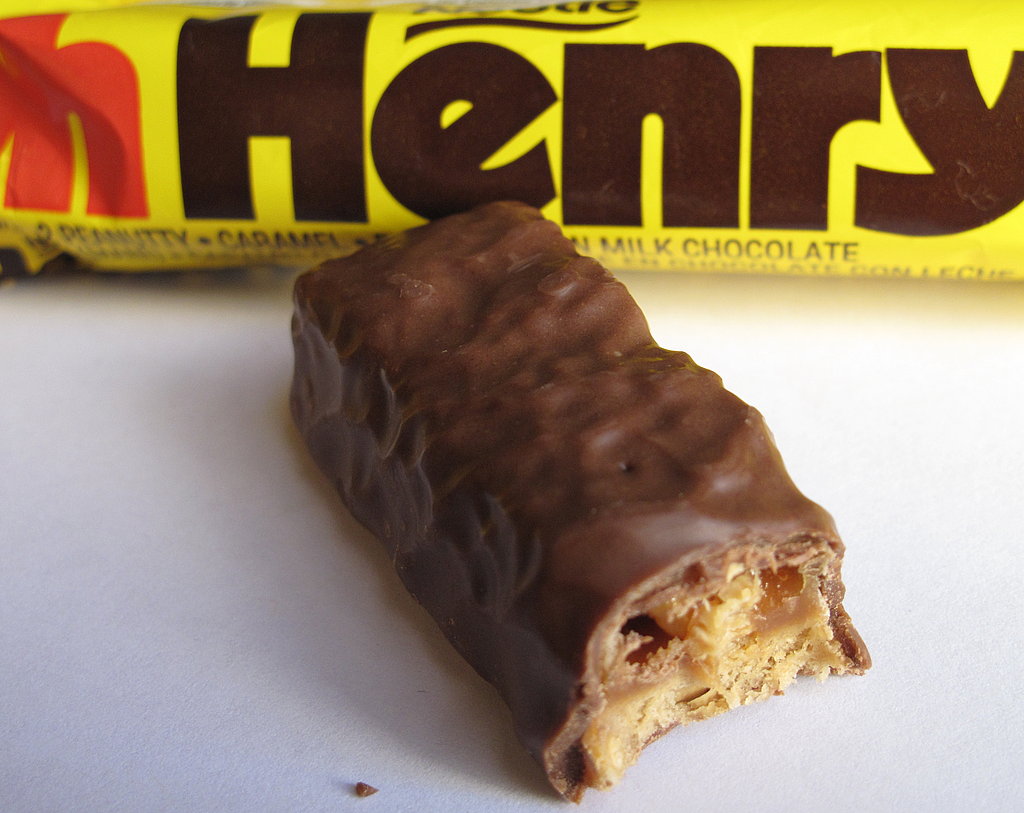
    1. Which food do you think has the most calories? How did you come to this conclusion? Probably an O Henry chocolate bar. (If you're not from Canada, you may not know what I'm talking about). I'm guessing these would have insane calories because it has peanuts, which are very calorie dense, fudge, and chocolate. But then again, there may be other foods out there with even more calories. Who knows.
  1. Which food has the least amount of calories? How did you come to this conclusion? I'm thinking celery. You can eat so much of that and not feel really energetic like you would even eating apples or something. 
  2. Which food surprises you most? Why? I was surprised at how many calories peanut butter has! I never would have guessed that it was so packed with energy, but that would explain why it's added to a lot of energy bars and such!

peer pressure.


  1. List some benefits of increasing the number and quality of friendships during adolescent teen years. Having lots of good friends helps you feel more connected while going through a lot of changes that sometimes leave teens feeling insecure. Having many friends also means that you will have more opportunity to learn more about other people and see how you work with other personalities. Having friendships of the opposite gender are also good because you can practice social skills.
  2. What fears do parents face as their teens become more independent and more focused on their relationships with friends as opposed to them (their parents)? They sometimes fear that the teens might pull away from the family and rebel against family values. They also fear that negative peer pressure might cause them to become involved in risky activities.
  3. List examples of positive peer pressure. Encouragement to do better in school, make safe decisions, find friends with high standards, and excel in activities that allow them to express their talents.
  4. List examples of negative peer pressure. Pressure to make decisions that give the appearance of being "cool", are out of character, or against their standards.
  5. Do you agree with this statement? Why or why not? "While it seems that teens are influenced by their peers, parents continue to be the most influential factor in their lives." I agree with that. If my friends were to decide that they didn't like me anymore I would be crushed, but I would know that my parents are always there for me to turn to. On the other hand, if my parents rejected me I could turn to my friends, but they wouldn't offer the same kind of comfort that parents can. Parents really are irreplaceable. 
  6. List and describe 4 strategies to cope with peer pressure. Learn when it is appropriate to say yes and when it is okay to say no. Learn how to say know. Build many relationships with a variety of people. Keep strong relationships with parents, siblings, or other family members. 

coping with grief and loss.


  1. What is the right way to grieve? There is no right or wrong way to grieve. It is a very individual process, varying from individual to individual.
  2. Define grief. Grief is a feeling of sadness, confusion, and/or uncertainty as a natural response to a significant loss.
  3. Name a few things that can lead to someone grieving. Divorce or breakup, the loss of a loved one or pet, a miscarriage, losing a job/financial stability, losing a friendship, or more.
  4. What are the five stages of grief? Denial, anger, bargaining, depression, and acceptance. 
  5. What can you do to help someone who is grieving? Respecting their feelings and understanding that they may take a while to come out of grieving is very important. I can also help by being willing to listen when they talk and be there to give them a helping hand when they need a little lift.

Wednesday, 29 January 2014

role of teens in suicide prevention.


  1. What are some warning signs that someone may be considering suicide? They may be depressed often or expressing feelings of self-hatred. Sometimes they try and get their things in order if they have planned it in advance. More obvious warning signs are if they mention it or openly discuss it with you.
  2. What can you do if you suspect a friend or classmate is considering suicide? If the situation allows for it, I would talk to their parents to make sure that they are aware. I would make an extra effort to be gentle and accepting, to try and help them feel that they are not alone. I would pray for them often and just keep watching the situation to see if there was anything else I could do to help them. If they openly discussed suicide with me I would find a way to help them understand that there are many people who want to help them.

stress management.


  1. What situations cause me to stress out? Giving a presentation to a live audience, performing music, huge workloads, big tests.
  2. What is happening in my body when I am stressed? My muscles definitely get tighter, my heart beats faster, my mind races a little so it's harder to concentrate.
  3. What are some strategies I can use to minimize stress? Meditation has proven to be very helpful to me, but I could also get into a habit of taking a couple minutes to walk around after each hour at my computer. 
  4. What are the two types of stress? Good stress (eustress) and bad stress (plain old stress).
  5. Have you experienced eustress? When? I have! I was doing a rehearsal for a music festival I was performing in, and I was nervous about hitting the high notes on my flute. But using stress management techniques like deep breathing, I turned that stress into eustress and used my body's energy to make it my best performance of that song. I don't think I've played that song so well even once since. 
  6. How can health and fitness influence stress? Exercising your body can eliminate stress. Also, if you are healthy it is easier to stay mentally healthy and avoid stress.
  7. What can you do to help a friend who is stressed out? I can be there to make them laugh! Laughter is my favourite way to eliminate stress and has been one of the most effective ones I've tried. 
If you haven't seen this TED talk on stress, I highly recommend watching it! It's not that long when you consider all the great information shared in it. 

Saturday, 18 January 2014

emotional intelligence quiz.

Sweet! I get to take an EQ quiz! I've always wanted to do this but couldn't find one I actually trusted.

My predicted score: ...I really have no clue. Maybe 14/20? Maybe higher? No idea.

My actual score: *drumroll please* 15/20! Ta-da! "Not bad. Your score means you're better than the average at reading expressions. And research suggests that people can improve their emotion recognition skills with practice."

And last but not least, five things I learned from the quiz:

  1. Each facial expression has a specific muscle movement that distinguishes it from the others. Recognizing emotions in others is so intuitive that when you stop to think about what actually happens when you're feeling a certain emotion it's hard to pinpoint exactly what it is.
  2. It's hard to fake emotions. Some of those pictures were so forced it was hard to tell what they were supposed to be showing.
  3. Reading expressions is very important to compassion and empathy.
  4. Emotional recognition skills can be improved with practce.
  5. EQ is definitely harder to measure than IQ.

Friday, 17 January 2014

self-concept & self-esteem.


  1. Do you agree with the opening/headlining sentence? Yes, I do. 
  2. Describe the difference between Self-Esteem and Self-Concept. Self-concept is the perception of how well you perform in various areas of your life, including areas such as academics, athletics, extra-curricular activities, and others. Self-esteem is how you view yourself in general.
  3. How has your self-concept grown in the past two years? Over the past two years I've discovered and developed more of my talents. Music has become a large part of who I am and I've found that I can strengthen my body through yoga, parkour, and soccer and become strong like I've always wanted to be. Understanding that I'm not fabulous at dance and basketball and areas that some of my peers valued, but that I do very well in others, has helped me accept myself more. 
  4. What are your domains of importance? Academics, specifically communication (writing and speaking) and the humanities (history, government, and literature). Music, leadership, and service to others are also domains of importance.
  5. What is the "normal-curve" that is referenced in the Reducing the Availability of Social Comparison Cues? How does it apply to grading practices? Do you agree with the method outline, "avoiding grading that allows only a few students to achieve high grades?" It is a bell curve method of grading that places most people in the average category. I don't agree with this method because it treats people less like individuals and more like objects to be categorized. 

Thursday, 9 January 2014

test post

Here's my new blog for Mind & Body Stewardship class!